
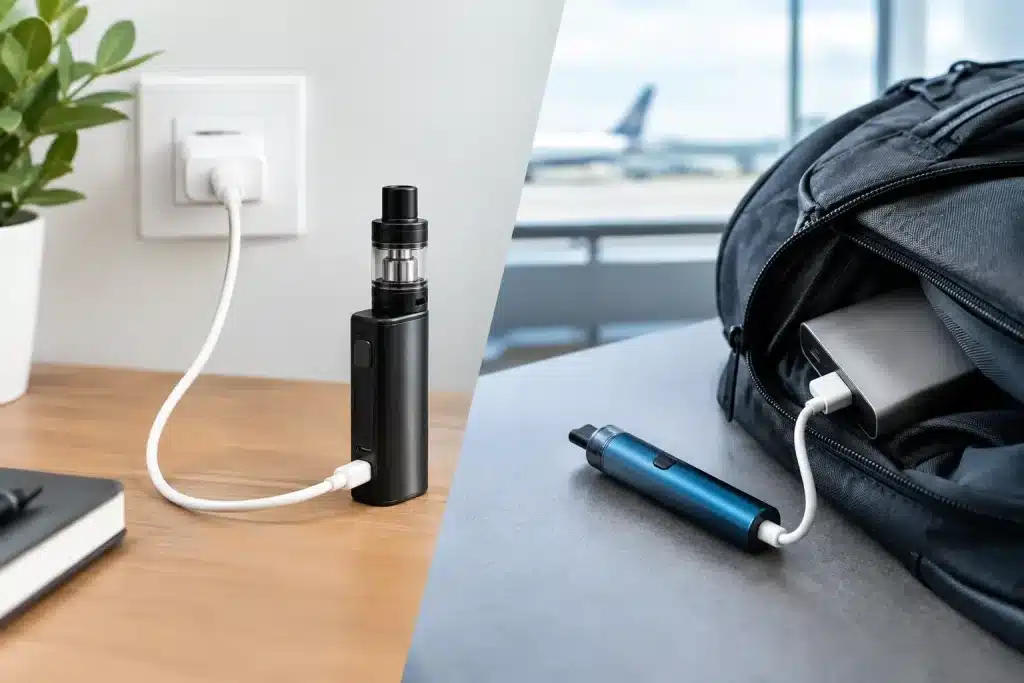
A vape that will not charge is frustrating. A vape that gets unusually hot, has a damaged battery or is charged carelessly is a reason to stop and check it. Knowing how to charge vape safely protects your device, helps its battery last longer and, most importantly, reduces avoidable risk.
Most current pod kits and vape mods make charging straightforward, but straightforward does not mean careless. The right cable, the right power source and a few sensible habits make a real difference whether you vape at home, in the office or while travelling around Cyprus.
Charge vape safely: start with the device manual
Your device manufacturer sets the charging limits for a reason. Before using a new kit, check whether it charges by USB-C, micro-USB or through an external battery charger, and look for its stated charging current. This is especially relevant with powerful box mods and removable-battery devices.
Use the cable supplied with the device where possible. If it has been lost, choose a good-quality replacement that fits securely and is designed for charging, rather than a loose, worn or unknown cable from a drawer. A damaged cable can overheat, charge inconsistently or put unnecessary strain on the charging port.
Do not assume every USB-C lead and plug combination will behave exactly the same way. Many modern devices manage their own charging well, but some are not designed for high-output fast-charging plugs. A standard, reputable USB power source is usually the sensible choice unless the manufacturer specifically confirms compatibility with faster charging.
Choose a stable power source
Charge from a reliable wall adaptor, computer USB port or quality power bank. Avoid cheap, unbranded adaptors, visibly damaged extension leads and overloaded multi-socket plugs. If a plug becomes very hot, makes a buzzing sound or smells unusual, unplug it and replace it.
A car USB port can be handy, particularly for customers travelling between Larnaca, Oroklini and elsewhere on the island, but do not leave a device charging in a parked car. Cyprus heat can build up quickly, and a hot car is not a safe place for a lithium-ion battery.
Keep an eye on charging
The easiest safe-charging rule is also one of the most ignored: charge your vape when you are awake and nearby. Place it on a hard, clear and non-flammable surface, such as a table or kitchen worktop. Keep it away from paper, clothing, bedding, curtains and direct sunlight.
Never charge a vape under a pillow, on a sofa or on a bed. It may seem convenient to leave it plugged in overnight, but this means a developing problem can go unnoticed for hours. Modern devices have safety protections, yet no battery-powered product should be treated as completely risk-free.
Your device may feel mildly warm while charging. It should not become painfully hot. If it does, disconnect it carefully, place it somewhere clear of flammable materials and allow it to cool. Do not plug it back in until you have identified the likely issue. It could be a faulty cable, adaptor, port, battery or device.
Other warning signs include a swollen casing, a chemical smell, leaking, crackling, repeated charging interruptions or a battery percentage that jumps erratically. Stop using the device if you see any of these signs. A replacement is far better value than taking a chance with damaged hardware.
Do not charge a wet or leaking vape
E-liquid spills happen, particularly during refilling or when a pod has been carried in a pocket or bag. Before charging, inspect the USB port and the base of the device. If there is liquid around the port, switch the device off if possible and let it dry fully before connecting a cable.
Do not poke metal objects, tissues or cotton buds deep into the charging port. That can damage the internal contacts or leave fibres behind. A clean, dry exterior and a quick visual check are usually enough. Persistent leaking is not merely inconvenient – it can interfere with charging and may signal that a pod, seal or coil needs replacing.
Removable batteries need extra care
If your mod uses removable 18650, 20700 or 21700 batteries, treat the cells as individual electrical components, not as loose accessories. For routine charging, a dedicated external battery charger from a reputable manufacturer is generally the better option. It gives each cell proper space, allows you to inspect batteries closely and avoids unnecessary wear on a mod’s USB port.
Check battery wraps regularly. The coloured outer wrap and small insulating ring around the positive end must be intact. If you notice tears, dents, corrosion, swelling or damage to the top insulator, do not use the battery until it has been professionally rewrapped or replaced.
Never carry loose batteries in a pocket, handbag or car compartment. Keys, coins and other metal objects can create a short circuit. Use a proper plastic battery case every time, even for a short journey.
When using two or more batteries in the same mod, use a matched set: same brand, model, age and charge level. Keep them together as a pair or set and rotate them together. Mixing an older cell with a newer one, or pairing batteries with different capacities, can make charging and discharging less predictable.
Internal charging versus an external charger
Many regulated mods can charge their removable batteries through the USB port, and this can be useful when you are out. It is not automatically unsafe when the manufacturer permits it. However, external charging is often preferable for regular use, particularly with dual-battery mods.
It depends on your device and routine. A compact pod kit with a built-in battery is designed for USB charging. A high-power dual-cell mod benefits from the extra control and inspection that a dedicated charger provides. If you are unsure what suits your setup, ask before buying rather than guessing after a problem appears.
Avoid charging while vaping
Some devices allow pass-through vaping while connected to power. That feature does not make it the best everyday habit. Vaping while charging can generate extra heat and may put more demand on the battery and charging circuit, especially with higher-wattage devices.
If you need a vape during the day, charge it before you leave home or keep a suitable spare device available. For heavier users, this is often more practical than repeatedly topping up a nearly empty battery. It also means you are not relying on random public USB points, which may be unreliable or unsuitable for your hardware.
Protect battery life without overthinking it
Lithium-ion batteries gradually lose capacity with use. You cannot stop that completely, but you can avoid making it worse. Do not run your device flat every day if you can help it, and do not leave it connected for long periods after it has finished charging.
For a device being stored for a while, turn it off and keep it in a cool, dry place away from direct sun. Avoid leaving it in a glove box, near a radiator or beside a window during hot weather. If you are taking a flight, keep vape devices and spare batteries in hand luggage, protected from accidental activation and short circuits. Airline rules can differ, so check your carrier before travelling.
Battery performance also changes with age. If a device suddenly needs charging far more often than it used to, this may be normal battery wear. But if poor battery life arrives alongside heat, leaking, physical damage or unreliable firing, stop using it and have the device checked.
When a quick shop visit is the smart move
Charging problems are not always caused by the battery. A worn cable, blocked port, failed pod connection or damaged charging board can produce similar symptoms. Replacing parts at random can cost more than getting the device assessed properly.
At Vape Culture, our staff can help match you with the right cable, compatible external charger, battery case or replacement device for your vaping style and budget. We stock current hardware across leading brands and can explain the practical differences clearly, whether you use a simple pod or a more advanced mod.
A safe charge takes only a few extra seconds: use the correct equipment, keep the device visible, keep it cool and stop immediately if something does not look or feel right. That small routine lets you enjoy your device with far more confidence.