
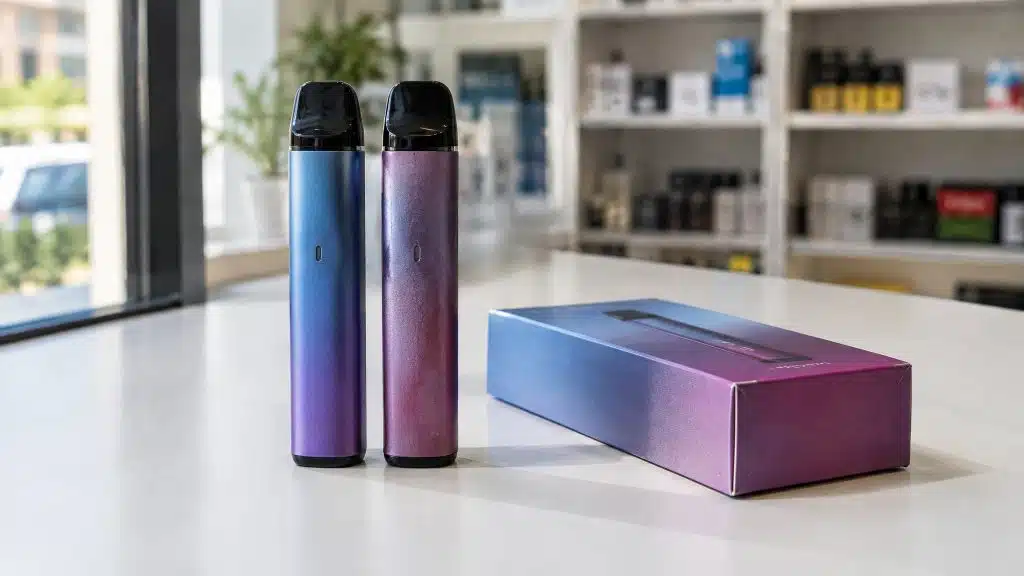
Knowing how to spot a fake Elf Bar in Cyprus takes about two minutes and a bit of practice. Whether you’ve just swapped cigarettes for vaping or you’ve been collecting devices for years, the checks are the same. Here’s what we’d look at, in the order we’d look at it.
Why spotting a fake Elf Bar in Cyprus matters
A fake disposable vape looks the part from a metre away, but it isn’t made to the same standards as the real thing. That means you can’t take the nicotine strength, the battery safety or what’s actually in the e-liquid on trust.
Nobody wants to find that out halfway through a device. A counterfeit can hit harder than the pack claims, taste harsh, leak into your pocket, or run a battery that was never properly tested.
Rules on single-use vapes are also shifting across Europe, with several countries moving to restrict them. Cyprus rules can change too, so ask in the shop what currently applies rather than relying on an old forum post.
This guide won’t turn you into a lab inspector. No visual check can prove what’s inside a device, so treat these checks as a way to catch the obvious fakes and walk away from the doubtful ones.
Start your genuine Elf Bar check with the packaging
Counterfeiters spend their money on the device and the margin, not the box. That’s why the packaging is the best place to start, and you don’t need to open anything.
Print quality, spelling and colour
Hold the pack under a decent light and look closely at the printing. Genuine packs have sharp text and clean edges around logos and flavour names.
Fakes often show blurred or uneven print, letters that look slightly smudged, or a logo that sits a few millimetres off. Read every word, too. Misspelt flavour names, odd grammar in the warnings and mangled brand text are classic giveaways.
Colour is the other tell. If the shade of a flavour looks duller, brighter or just different from a pack you know, pay attention. Off-shade colour on its own isn’t proof, but it’s a reason to keep checking.
Seals, film and tamper marks
A genuine seal is neat and tight. The film sits flat, the edges are straight, and there are no bubbles, creases, lifted corners or patches of glue.
A flimsy film, a badly cut edge or a corner that looks re-glued suggests the pack has been opened or made somewhere it shouldn’t have been. If the film is loose enough to slide around, that’s worth questioning.
The easiest method is to lay the suspect pack next to one from a trusted shop. Differences in finish, weight and print jump out when the two are side by side, even when neither looks wrong on its own.
Check the label details and verification code
Once the outside looks right, turn the pack over. The small print tells you more than the front ever will.
Label details a genuine pack should show
A legitimate disposable should carry a health warning, the nicotine strength, the e-liquid volume, an ingredients list, and details of the manufacturer or importer. Many packs also show a batch number.
Missing details are a flag. So is anything that contradicts the device in your hand: a pack that says one strength while the device says another, or a volume that doesn’t match what’s printed on the body.
EU rules cap nicotine e-liquid at 20mg/ml and tanks or cartridges at 2ml, under the Tobacco Products Directive. A disposable sold in Cyprus that claims more than either limit isn’t a bargain, it’s a warning sign.
If the pack and device don’t match on strength, volume or manufacturer details, stop there and don’t buy it.
Using the Elf Bar verification code safely
Some packs carry a printed verification code. Where one is there, it can help you confirm the product is genuine, but only if you check it the right way.
Go to the brand’s own official channel yourself, by typing the address into your browser or using the brand’s official website. Never use a link, phone number or QR code that a seller sends you or sticks on the pack, because a fake pack can point to a fake checking page that says everything is fine.
A code that looks scratched, reprinted or tampered with is a red flag. A missing code, on the other hand, proves nothing either way, since not every pack carries one. Use it as one more piece of evidence, never the only one.
Look past the box to the device itself
A good fake can have a convincing box, so the device is the next stop. Do this only when you’re sure of what you’re doing, and ideally in the shop before you pay.
Build quality, draw and leakage
A genuine device feels solid and finished. Fakes tend to show uneven seams, rough edges, wobbly mouthpieces, printing that rubs off, or a body that feels lighter or cheaper than you’d expect.
Then there’s the draw. A fake can pull too harshly or too weakly, or taste burnt or chemical right from the first puff. Leaking is the other giveaway, such as sticky residue around the mouthpiece or e-liquid pooling in the wrapper.
Never open or break a disposable to test it. The battery and the e-liquid are sealed in for a reason, and prising one apart can cause a burn, a short circuit or a nasty skin reaction.
Stop using any device that is swollen, hot or leaking, even if the pack looked perfect. Those are battery and build problems, and they matter more than any label.
Counterfeit vape warning signs at the point of sale
Sometimes the product isn’t the first clue. How and where it’s sold often tells you more than the packaging does.
Prices that look too good to be true
Price is the usual lure. If a deal sits far below normal local pricing, ask yourself what’s been cut to make it work, because the answer is usually the quality control.
You can use typical e-liquid prices in Cyprus as a rough guide to what things cost locally. It covers e-liquids rather than disposables, so it won’t give you an exact figure for an Elf Bar, but it shows you the general range, and a price that’s wildly under it deserves a second look.
Who is selling and how
Look at the seller as closely as the product. Unbranded boxes, a seller who can’t tell you who imports the product, and anyone who won’t give a receipt should all make you pause.
Be wary of unofficial social-media accounts and street sellers offering large quantities at suspiciously low prices. A legitimate shop doesn’t need to sell you thirty devices from a bag.
Visitors need to be careful too, since it’s tempting to grab a disposable from the first person who offers one. If you’re passing through, the quick stops near Larnaca Airport are a more reliable bet than an unknown seller.
If you want a longer checklist on the shop side, here’s how to judge whether a shop is trustworthy.
What to do if you think you have a fake
First, stop using it. If something tastes wrong, feels hot or looks damaged, you don’t need to finish the device to be sure.
Keep the packaging and any receipt, because they’re your evidence if you want to complain or report the seller. Photograph the label, the seal and any code before you throw anything away.
Don’t put the device in the household bin. Lithium batteries can start fires in bin lorries and recycling plants, so take it to a battery or e-waste collection point instead.
You can also report a suspect seller to the consumer protection authorities in Cyprus, such as the Competition and Consumer Protection Service. Include where you bought it, when, and what you paid.
Where to buy authentic Elf Bar in Larnaca
The simplest way to avoid a fake is to buy in person. You can hold the pack, compare it with others on the shelf and ask questions before you pay, which an overseas online order can’t offer. If you’re weighing up online or in-store buying, that’s the biggest difference.
If you’re still choosing between brands, we’ve also put together Elf Bar compared with Lost Mary.
What to ask before you buy in Larnaca
You can ask these in any shop, ours included:
- Where does the stock come from, and who imports it?
- Can you walk me through the label on this pack?
- Does the strength and volume on the box match the device?
- Can I have a receipt?
A shop that’s happy to answer all four is usually one you can trust. If the answers are vague or the staff get defensive, take that as your cue to leave.
We’re in Larnaca and we also look after Oroklini. You’re welcome to visit the shop in person, look at packaging with your own eyes and talk it through with the team. No pressure to buy anything.
Frequently asked questions
Can I check an Elf Bar is genuine just by looking at the box?
Not completely. Blurred print, spelling mistakes, off-shade colours and a loose or re-glued seal catch many fakes, but a good counterfeit can pass a quick look. Check the label details too, and compare the pack with one from a trusted shop.
Is it safe to use the verification code on my pack?
Yes, if you check it through the brand’s own official channel, typed in by you. Never use a link, number or QR code a seller gives you. A tampered-looking code is a red flag, but a missing code doesn’t prove a pack is fake.
Is a very cheap disposable always fake?
Not always, but a price far below normal local pricing is a warning in itself. Combine it with other signs, such as unbranded boxes, no receipt or a seller who can’t name the importer. If more than one shows up, walk away.
What should I do with a device I think is fake?
Stop using it and keep the packaging and receipt. Don’t put it in the household bin; take it to a battery or e-waste collection point. You can report the seller to the consumer protection authorities in Cyprus.
Should I open a disposable to see what’s inside?
No. Opening or breaking a disposable can cause burns, a short circuit or skin contact with the e-liquid, and it won’t tell you much anyway. If a device is swollen, hot or leaking, simply stop using it.