
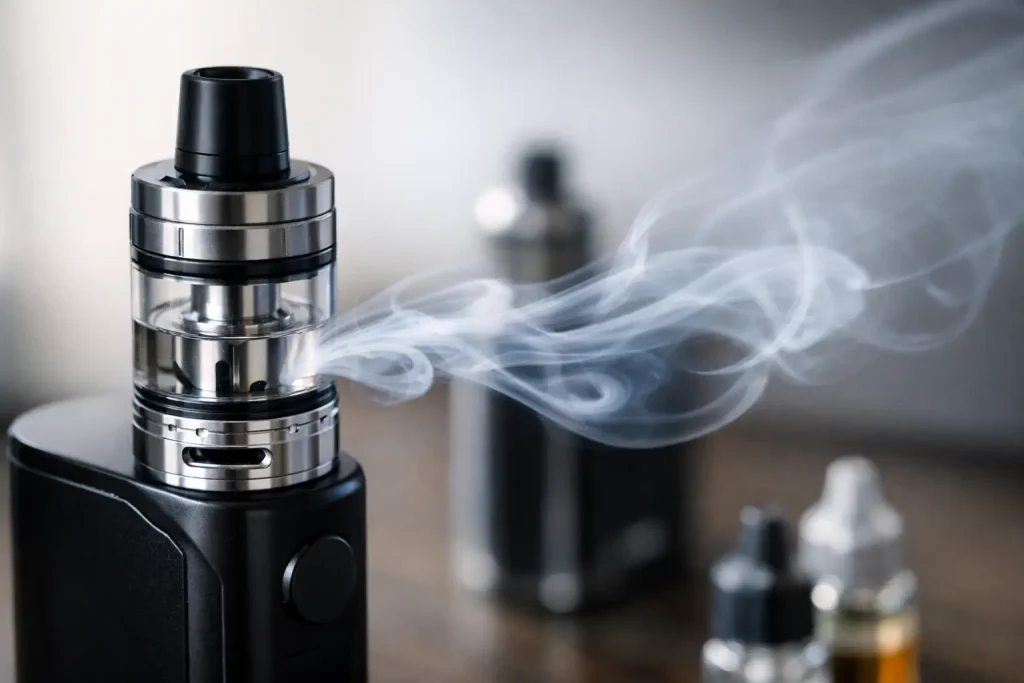
A tank can be full, the coil can be new, and the e-liquid can be a favourite – yet the vape still feels wrong. Usually, the issue is the air entering the tank. This guide to vape tank airflow explains what that control ring really changes, how to find a draw that suits you, and when airflow is a sign that another part of the setup needs attention.
For adult vapers, airflow is not a minor adjustment. It affects the resistance of the draw, the warmth of the vapour, flavour intensity, vapour production and how a coil performs over time. A few millimetres on the airflow ring can make the difference between a satisfying setup and one that feels harsh, weak or frustratingly noisy.
What vape tank airflow actually does
The airflow control is normally the adjustable ring at the base of a vape tank, although some newer tanks and pod-style devices bring air in from the top or side. Turning the ring exposes or closes small air slots. More open space allows more air to travel across the coil as you inhale. Less open space restricts that air.
Air cools the coil and carries vapour from the chamber to the mouthpiece. With the airflow wide open, the draw is lighter and airier, the vapour is generally cooler, and the device can produce more visible vapour when used with a suitable low-resistance coil. Closing it down creates a tighter pull, often concentrates flavour and gives warmer vapour.
There is no single ‘best’ airflow setting. The right setting depends on the coil, power level, e-liquid, nicotine strength and, most importantly, the way you prefer to inhale. Copying somebody else’s settings can be a useful starting point, but it will not necessarily produce the result you want.
Guide to vape tank airflow: find your draw style
The easiest way to set airflow is to start by identifying whether you prefer mouth-to-lung or direct-to-lung vaping. These terms describe how vapour is inhaled, and they should guide both your tank choice and your adjustment.
Mouth-to-lung: a tighter, cigarette-style draw
Mouth-to-lung, often shortened to MTL, means drawing vapour into the mouth first and then inhaling it. It is usually preferred by people moving away from cigarettes, as well as vapers who want a more restricted, controlled pull.
For an MTL tank, begin with the airflow mostly closed, leaving one small hole or a narrow slot open. Take a gentle, steady puff rather than pulling hard. If the draw feels too stiff, open the airflow a little at a time. If it feels too airy or the flavour seems thin, close it slightly.
MTL coils are commonly higher resistance and used at lower wattages. They generally pair well with e-liquids that are thinner and with nicotine strengths appropriate for the user. A fully open airflow on a small MTL coil can make the vapour feel cool and dilute, while too little airflow can make it overly hot or cause a tight, uncomfortable pull.
Direct-to-lung: a more open, airy inhale
Direct-to-lung, or DTL, involves inhaling vapour straight to the lungs. This style is common with sub-ohm tanks, larger coils and higher-power devices. It needs considerably more airflow because the coil is vapourising more e-liquid and generating more heat.
Start with the airflow around three-quarters open, then try a few short puffs at the coil’s recommended wattage range. Open it further if the vapour is too warm, if the draw feels restricted or if the coil seems to struggle at higher power. Close it in small steps if the vape is too airy or you want more flavour concentration.
A wide-open setting is not automatically better. Some coils deliver their best flavour when the airflow is slightly reduced, because the vapour is not being diluted by excess air. Close it too far, however, and a powerful coil can become hot, harsh and more likely to spit.
Restricted direct-to-lung: the middle ground
Restricted direct-to-lung, known as RDTL, sits between these two styles. It gives a looser draw than MTL but does not require the fully open airflow of a high-powered sub-ohm tank. Many modern pod kits, adjustable pods and compact tanks are designed for this versatile middle ground.
Set the airflow around halfway open and adjust from there. RDTL is a strong choice for adult vapers who want more vapour than a classic starter setup offers but do not want a very airy cloud-focused draw. It can also be an excellent way to make a new device feel more natural without immediately changing coils.
Match airflow to the coil, not just your preference
The coil is the centre of the setup. Its resistance, diameter, wicking ports and recommended wattage are all designed around a certain amount of air. Trying to force an MTL coil into a wide-open DTL experience, or suffocating a large sub-ohm coil with minimal airflow, rarely works well.
Check the writing on the coil or its packaging before changing your settings. A higher-resistance coil with a modest wattage range usually calls for a tighter airflow. A low-resistance mesh coil with a higher wattage range normally needs wider airflow to keep the vapour comfortable and help the coil operate as intended.
Power matters as well. If you increase wattage, you may need to open the airflow slightly to prevent excessive heat. If you lower wattage, a very open setting can leave the vape feeling weak. Make one change at a time: adjust the wattage, take a few puffs, then adjust the airflow. Changing everything together makes it difficult to know what has improved the result.
How airflow changes flavour, warmth and vapour
A restricted setting often makes flavour seem stronger because there is less air mixed into the vapour. It can be particularly enjoyable with tobacco, dessert and richer fruit blends. The trade-off is a warmer vape and a tighter pull.
An open setting creates cooler, smoother vapour and is better suited to larger clouds. It can work especially well with fresh, menthol and bright fruit flavours, though this is personal taste rather than a rule. The trade-off is that delicate flavour notes may feel less defined.
E-liquid thickness should also be considered. High-VG e-liquids are thicker and are commonly used in sub-ohm tanks with larger wicking ports and open airflow. Thinner, higher-PG blends are more often suited to low-power MTL tanks. Using an unsuitable liquid can contribute to leaking, dry hits or poor wicking, and airflow adjustment alone will not fix it.
Troubleshoot common airflow problems
If your tank whistles, the airflow may be almost closed, leaving a narrow passage for air to rush through. Open it a fraction and check that the airflow ring is sitting evenly. A whistle is annoying but is not usually a serious fault.
Gurgling or spitback can happen when excess e-liquid reaches the coil chamber. This may be caused by drawing too sharply on a tight setting, using e-liquid that is too thin for the coil, overfilling the tank or leaving it in a hot car. Check the coil, gently clear any excess liquid from the mouthpiece, and avoid covering the airflow holes when filling.
Leaking from the airflow slots usually points to a coil or sealing issue rather than the airflow setting itself. Make sure the coil is fully pushed or screwed into place, the tank sections are tightened correctly, and the O-rings are undamaged. Do not leave a tank on its side for long periods, particularly in warm weather. If a coil has been used for a while and leaking begins suddenly, replacing it is often the practical answer.
A burnt taste needs prompt attention. Stop vaping, check that the tank contains enough e-liquid and confirm that the coil is within its recommended wattage range. New coils must be primed by allowing e-liquid to soak into the cotton before use. Opening the airflow may cool a coil that is being run too hot, but it cannot repair cotton that has already been scorched.
Small adjustments give the best result
Avoid turning the airflow ring from fully closed to fully open after every puff. Choose a starting position, use the device for several puffs, then move the ring by a small amount. Give the coil time to settle, especially after a refill or wattage change.
Keep the airflow slots clean too. Pocket lint, dried e-liquid and dust can restrict the draw and make an otherwise reliable tank feel inconsistent. A quick wipe with tissue when refilling is usually enough. If you remove the tank for a deeper clean, make sure every part is completely dry before reassembling it.
The best setup is the one you will happily use all day: enough resistance to feel satisfying, enough airflow to stay comfortable, and a coil and e-liquid that work properly together. If your current tank is still not giving you that balance, bring the device, coil and e-liquid bottle into Vape Culture. Our in-store team can check the setup, match the right replacement coil or tank, and help you leave with a draw that feels right from the first puff.