
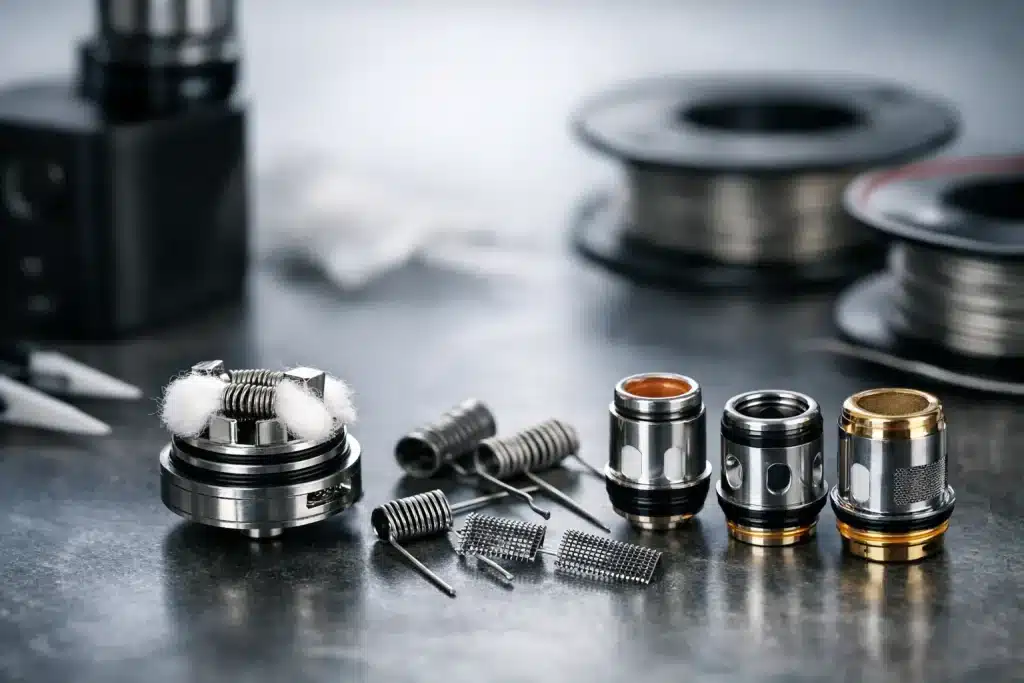
A coil can make a familiar e-liquid taste clean and full one day, then muted or burnt the next. That is why this guide to vape coil types and materials starts with the practical question that matters most: which coil actually suits your device, vaping style and e-liquid? The right answer protects your kit, improves flavour and stops money being wasted on replacement coils that do not fit.
For adult vapers in Larnaca, Oroklini and across Cyprus, coils are one of the most regular essentials to replace. The packaging may look technical, but choosing well is straightforward once you know what the numbers and materials mean.
Start with compatibility, not resistance
A replacement coil must be made for your exact pod, tank or device range. Two coils can look almost identical yet use different seals, connection points or airflow designs. Never choose a coil only because it has a resistance you like – check the device name and coil series first.
For example, a pod system may take several coils from the same family, while a sub-ohm tank may have its own dedicated range. The coil name on the old coil, device manual or pod packaging is usually the quickest way to confirm it. If you are unsure, bring the device or used coil into store. It is far better to match it correctly before opening a pack.
Once compatibility is confirmed, resistance and coil construction decide how the vape feels.
What coil resistance means
Resistance is measured in ohms, shown as the omega symbol (Ω). In simple terms, lower-resistance coils use more power and usually produce warmer vapour, bigger clouds and a stronger flavour hit. Higher-resistance coils use less power, run cooler and are generally better suited to a tighter draw and longer battery life.
Higher-resistance coils: usually 0.8Ω to 1.2Ω or above
These are commonly used for mouth-to-lung vaping, often shortened to MTL. You draw vapour into your mouth first, then inhale, which feels closer to a traditional cigarette draw. They suit lower-power pod kits, a more restricted airflow setting and nicotine salts or lower-VG e-liquids.
A 1.0Ω coil will normally use less e-liquid than a 0.3Ω coil, making it a sensible option for vapers who want a discreet, efficient daily setup. The trade-off is that it will not produce the large, dense clouds associated with high-power devices.
Lower-resistance coils: usually below 0.6Ω
These coils are often designed for restricted direct-to-lung (RDL) or direct-to-lung (DTL) vaping. Vapour is inhaled directly into the lungs, with more open airflow and a more substantial vapour output. They work at higher wattages, use e-liquid faster and need a device battery that can support their recommended range.
Sub-ohm coils are popular with vapers chasing rich flavour and cloud production, particularly with higher-VG e-liquids. However, they are not automatically better. If you prefer a quieter, tighter vape or use higher nicotine strengths, a lower-power pod coil can be the more comfortable and economical choice.
Always use the wattage range printed on the coil. Starting at the lower end of that range is a good habit, then increase gradually if you want a warmer vape.
Vape coil types: the builds you will see most often
Modern stock coils come in several designs. The purpose is the same – heat e-liquid held in cotton – but the shape and surface area change flavour, vapour, responsiveness and power requirements.
Standard round-wire coils
A traditional round-wire coil is made from a single length of wire shaped into a small spiral. It is simple, reliable and still common in MTL coils. Because it has less surface area than more complex builds, it tends to heat more gently and works well at lower wattages.
For a straightforward pod or starter kit, round-wire coils offer an efficient, uncomplicated experience. They are often the sensible choice when battery life and controlled e-liquid use matter more than maximum vapour.
Mesh coils
Mesh is now one of the most widely used coil styles in pods and tanks. Instead of a narrow wire spiral, it uses a fine strip or sheet of perforated metal. This creates a larger heating area, allowing more of the wick to heat evenly at once.
The result is usually faster firing, more consistent flavour and fuller vapour. Mesh coils can also reduce the chance of isolated hot spots that scorch the cotton. They are available in both lower-power pod options and high-wattage sub-ohm versions, so mesh does not automatically mean a powerful, cloud-focused vape.
The trade-off is that many mesh coils use more e-liquid than a basic MTL coil. With sweet e-liquids, they can also become clogged as residue builds on the larger heated surface.
Clapton and multi-wire coils
Clapton-style coils use a core wire wrapped with a thinner outer wire, similar in appearance to a guitar string. Other multi-wire builds use two or more wires together. These designs increase surface area and can deliver detailed flavour, especially in advanced tanks and rebuildable atomisers.
They generally need more power than a simple round-wire coil and may take slightly longer to heat up. In sealed, ready-made coils, the manufacturer has already matched the build to the correct wattage range, so follow the printed guidance rather than trying to judge by appearance.
Ceramic coil systems
Some cartridges and pods use ceramic heating elements or ceramic-supported wicks. Ceramic can distribute heat evenly and is often associated with a smooth vape, particularly in compact closed or refillable pod systems. Availability varies by brand, and replacement options are usually device-specific.
Do not assume a ceramic coil will last longer than cotton-based alternatives in every situation. E-liquid sweetness, wattage and how often you vape still have a major effect on coil life.
Guide to vape coil materials
The metal in a coil affects how quickly it heats, what power modes it can use and, to a smaller extent, the character of the vape. In most current pod and tank coils, the material is selected by the manufacturer. You mainly need to know it when using variable wattage, temperature control or rebuildable equipment.
Kanthal
Kanthal is a durable iron-chromium-aluminium alloy and one of the most established coil materials. It performs reliably in standard wattage mode, holds its shape well and is widely used in factory coils and rebuildable setups.
Kanthal is not intended for temperature control. For everyday wattage vaping, though, it remains a dependable choice with a familiar, steady response.
Nichrome
Nichrome is a nickel-chromium alloy. It heats faster than Kanthal and is often used in coils designed for a quick, responsive vape. Like Kanthal, it is generally for wattage mode rather than temperature control.
Some vapers simply prefer its faster ramp-up. Others will notice little difference in a ready-made coil, where airflow, wicking and coil design also shape the final result.
Stainless steel
Stainless steel is versatile. Depending on the grade and device settings, it can be used in wattage mode and temperature control mode. It heats relatively quickly and is popular with experienced vapers who want more flexibility from a rebuildable setup.
Temperature control is not a shortcut to better flavour. It needs a compatible mod, the correct wire setting and a stable coil connection. If that sounds like more adjustment than you want, standard wattage mode with the correct stock coil is the easier route.
Nickel and titanium
Nickel and titanium are primarily associated with temperature control. Both require the correct device mode and careful setup. They are not general-purpose materials to use on a basic wattage setting, and they are less common in everyday replacement-coil shopping than Kanthal, nichrome and stainless steel.
For most vapers using modern pods and tanks, the coil’s stated resistance, wattage range and compatibility are more useful buying details than the wire alloy alone.
Match the coil to your e-liquid
Your e-liquid thickness matters. Higher-PG liquids are thinner and typically suit smaller-wick, lower-power MTL coils. Higher-VG liquids are thicker and are commonly better in sub-ohm coils with larger wicking ports. Putting a thick high-VG liquid into a small pod coil can cause dry hits because the cotton cannot absorb liquid quickly enough.
Sweetened e-liquids are enjoyable but can shorten coil life. Sweeteners caramelise on the heating surface, gradually dulling flavour and darkening the cotton. If you rotate dessert or candy flavours, expect to change coils more often than with cleaner, less sweet blends.
Prime every new coil properly
A new coil needs time for the cotton to become fully saturated. Fit the coil, fill the pod or tank, and leave it for around five to ten minutes before vaping. Then take a few gentle puffs at the bottom of the recommended wattage range.
Do not repeatedly chain vape a fresh coil. Even a well-primed wick needs time to draw in more e-liquid between puffs. A burnt hit caused by dry cotton rarely improves, so replacing the coil is usually the only solution.
Know when it is time to replace it
There is no exact number of days a coil should last. Use depends on wattage, e-liquid type, puff frequency and tank capacity. A coil may last several days or well over a week, but replace it when flavour becomes dull, the vape tastes burnt, liquid darkens unusually fast, or you hear persistent gurgling and leaking after basic checks.
A fresh, correctly matched coil is one of the simplest upgrades you can make to your vape. Vape Culture’s knowledgeable team can help match coils to your exact device, preferred draw and e-liquid style, so your next replacement feels right from the first puff.