
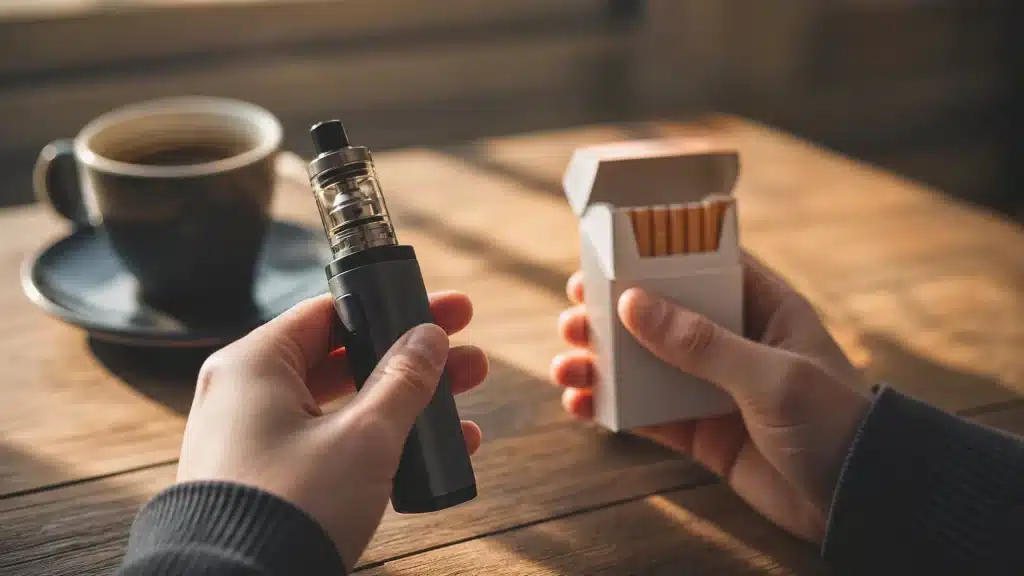
Picking the right nicotine level is the one decision that makes or breaks the switch from cigarettes to vaping. Get it right and the cravings stay quiet, the throat hit feels familiar, and you don’t look back. Get it wrong and you either feel nothing or feel like you’ve inhaled a lit firework. The best nicotine strength for beginners isn’t a single number, it’s personal. But there’s a straightforward way to find yours, and that’s exactly what this guide covers.
Why Nicotine Strength Matters When You First Start Vaping
Too low and cravings win. Too high and the harshness puts you off vaping altogether, which usually means going back to cigarettes. Those are the real stakes of this decision.
The good news is it isn’t complicated. Nicotine strength is really just about matching what your body is already used to. If you smoked a specific number of cigarettes a day, your body has a nicotine expectation. Vaping needs to meet that expectation closely enough, especially in the first few weeks, so the transition feels comfortable rather than like white-knuckling it.
This is also the reason under-dosing is such a common failure point when people try switching from smoking to vaping. Starting too low sounds sensible, but it usually backfires. The UK’s own health authorities have consistently noted that helping smokers find a satisfying nicotine level is critical to long-term success, and under-strength e-liquid is one of the main reasons new vapers return to cigarettes.
Once you’re settled, adjusting is easy. But first, get the starting point right.
Nicotine Strength Vaping: Understanding the Numbers
What mg and % actually mean
Every e-liquid bottle shows nicotine strength in one of two ways: mg/ml (milligrams per millilitre) or percentage (%).
They describe the same thing in different formats:
- 20 mg/ml = 2% nicotine content
- 10 mg/ml = 1%
- 3 mg/ml = 0.3%
So when a bottle says “20 mg”, there are 20 mg of nicotine in every millilitre of liquid. Both labels appear in shops, and neither is more accurate than the other. For a fuller breakdown of what that means in practice, check out our full beginner’s guide to vaping.
Freebase nicotine vs. salt nicotine for beginners
This is where it gets genuinely useful to know the difference.
Freebase nicotine is the traditional form. It’s what most older e-liquids use. It works well at lower concentrations (3–12 mg), but at higher strengths it creates a sharp throat hit that many people find too harsh.
Nicotine salts (nic salts) use benzoic acid to lower the pH of the nicotine. This makes high-strength e-liquid far smoother to inhale than freebase at the same concentration, which is why 20 mg salt can actually feel milder than 18 mg freebase to many users. Nic salts are designed for lower-power pod and pen-style devices, and their delivery curve more closely mirrors how a cigarette absorbs nicotine into the body.
For most beginners in 2026, salt nicotine is the more comfortable starting point, especially if you’re using a pod kit.
How Much Nicotine Should I Vape? Match Your Strength to Your Smoking Habit
Device type matters here too. A low-wattage pod delivers less vapour per puff than a high-powered sub-ohm mod, so the nicotine in a 20 mg pod liquid is absorbed more gradually per puff. Understanding how to use a vape pen properly will also help you get consistent delivery from whatever device you choose. With that context, here’s how to match your strength to your habit.
Light or social smokers
If you smoked fewer than 10 cigarettes a day, or you were a social smoker rather than a daily one, your nicotine dependency is relatively low. A good starting point is 10–12 mg freebase or 10 mg salt nic on a pod device. You want enough satisfaction to replace the habit, but you don’t need a heavy hit to feel it.
Regular pack-a-day smokers
A pack a day (around 20 cigarettes) is the most common starting profile we see. 18–20 mg freebase or 20 mg salt nicotine on a pod device is typically the right match. The tighter draw and nicotine-salt chemistry closely mirrors how a cigarette absorbs into the body, so most pack-a-day smokers find 20 mg salt delivers comparable satisfaction.
Heavy or chain smokers
If you were smoking more than 20 cigarettes a day, start at 20 mg salt nic. Full stop. Trying to go lower to “be sensible” usually means cravings break through, which leads to chain-vaping or giving up. Heavy smokers who start at 20 mg salt consistently report fewer withdrawal symptoms than those who start at lower strengths. Get stable first, then step down later.
Nicotine Mg Vape Guide: Satisfaction vs. Harshness, Finding the Balance
Higher freebase nicotine means more throat hit. For some ex-smokers, that scratchy feeling at the back of the throat is reassuringly familiar, it feels like smoking. For others, anything above 12 mg freebase feels too sharp, almost burning.
The trade-off is real: the more nicotine you need, the harsher freebase gets. Salt nicotine solves this directly. By lowering the pH of the liquid, nic salts smooth out the throat hit at high concentrations without reducing the nicotine being delivered. So if a strength feels harsh on freebase, the right move is to switch to nic salts at the same or similar mg, not to drop the mg and under-serve your cravings.
Practical tip: harsh throat hit means try salt nic first. Only reduce the strength once you know it’s not just a formulation issue.
Should Beginners Choose Nic Salts or Freebase Nicotine?
For most ex-smokers starting out in 2026, nic salts are the better default.
Salt nicotine delivers a smoother hit at the higher strengths most ex-smokers need. It’s designed for the pod and pen-style devices that dominate the beginner market. And its absorption profile is closer to a cigarette, which helps the transition feel less like withdrawal and more like a swap.
That said, freebase nicotine isn’t wrong, it just suits different situations. If you smoked lightly and want to start at a low strength (3–6 mg), freebase is perfectly fine. If you’re planning to move to a sub-ohm device down the line, freebase at lower concentrations makes more sense there too. Understanding how vaping compares to cigarettes can also help you set realistic expectations about what the switch involves.
Both options work. The right one depends on your device and how much nicotine you need. When in doubt, start with salt nic on a pod kit.
How to Adjust Your Nicotine Level Over Time
Once the cravings are reliably under control, usually a few weeks into the switch, many vapers start to reduce their nicotine level gradually. There’s no rush. Stepping down too early is one of the most common reasons people slip back.
The general approach: once you’ve gone two to three weeks without a strong craving and vaping feels settled rather than like a lifeline, try dropping to the next strength down. From 20 mg salt to 10 mg salt, for example, or from 12 mg freebase to 6 mg.
Go slowly. If cravings return, go back up and wait longer before trying again. There’s nothing wrong with staying at your starting strength for months. The goal is to not smoke, not to minimise nicotine as fast as possible.
At Vape Culture in Larnaca, the most common question from first-time customers switching from cigarettes is “will this be strong enough?”, which is exactly why we stock a full range of nic strengths from 3 mg to 20 mg. You can trial and adjust without committing to a large purchase. Browse the e-liquids available in Larnaca online, or better yet, pop into Vape Culture in Larnaca and chat to the team. No pressure, no jargon, just straightforward advice from people who help ex-smokers make this switch every day.