
Vaping vs Smoking: Understanding the Benefits and the Risks
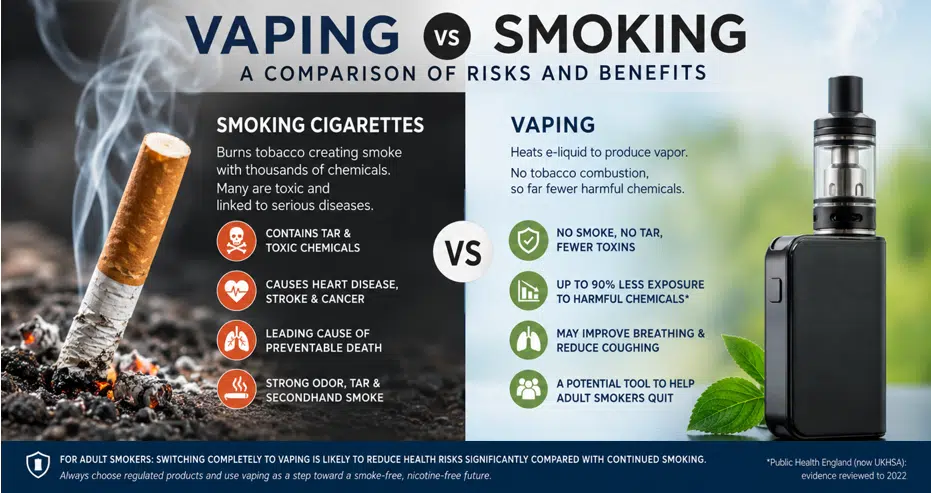
For adult smokers, one of the most important public health questions is not whether vaping is completely harmless—it is not—but whether vaping is less harmful than smoking combustible cigarettes.
Based on current evidence, most major health bodies agree on one key point: for people who already smoke, switching completely to vaping is likely to reduce health risks significantly.
Why Smoking Is So Harmful
The biggest danger from cigarettes is not nicotine itself—it is the burning of tobacco.
When tobacco burns, it produces thousands of chemicals, including:
- Tar
- Carbon monoxide
- Formaldehyde
- Benzene
- Tobacco-specific nitrosamines
Many of these are known carcinogens or toxins linked to:
- Cancer
- Heart disease
- Stroke
- Chronic lung disease
- Premature death
Smoking remains one of the leading preventable causes of death worldwide.
The Main Benefit of Vaping: No Combustion
Vaping works differently.
Instead of burning tobacco, vape devices heat e-liquid to create aerosol (vapour). This means users avoid many of the most dangerous toxic byproducts created by combustion.
Because there is no smoke and no tar, exposure to harmful chemicals is typically much lower. Multiple studies show that people who switch completely from smoking to vaping experience major reductions in toxic exposure markers.
Some studies report reductions of 90% or more in exposure to certain tobacco-related carcinogens after switching entirely from cigarettes to regulated nicotine vaping products.
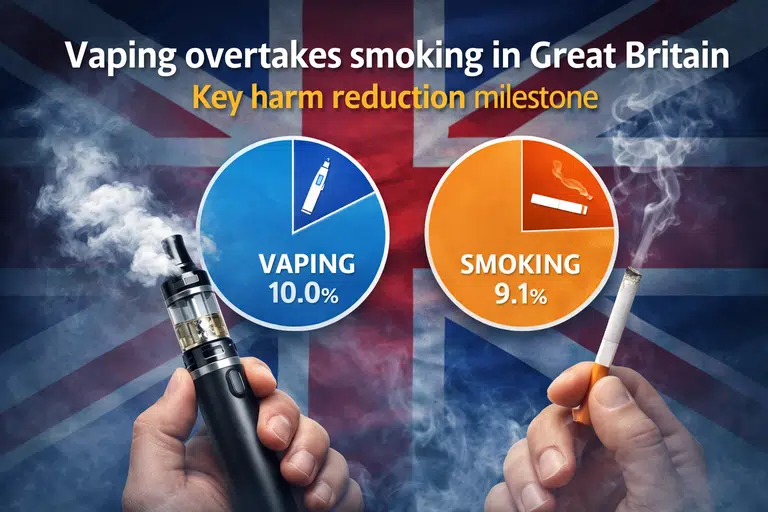
Harm Reduction Implications of Vaping Overtaking Smoking in Great Britain
Potential Benefits of Switching from Smoking to Vaping
- Reduced Exposure to Toxic Chemicals
Compared with cigarette smoke, vapour generally contains:
- Far fewer toxic compounds
- Lower concentrations of harmful substances
- No combustion byproducts like tar
This is why health agencies in the UK and other countries often describe vaping as substantially less harmful than smoking.
- Better Smoking Cessation Success
Vaping has helped many smokers quit cigarettes completely.
Evidence suggests nicotine vaping products can be more effective than some traditional nicotine replacement therapies (such as patches or gum), especially when combined with behavioural support.
For many smokers, vaping helps because it addresses both:
- Nicotine cravings
- The behavioural habit of smoking
- Improved Respiratory Symptoms After Switching
Many former smokers report:
- Less coughing
- Improved breathing
- Better stamina
- Less chest tightness
- Lower Public Health Harm
From a harm-reduction perspective, moving smokers away from cigarettes can substantially reduce smoking-related disease burden.
Countries that support vaping as a smoking cessation tool often see it as a practical strategy to reduce tobacco-related illness.
UK milestone: vaping surpasses smoking — what it means for public health
Vaping and Young People
One area of major concern is youth vaping. Strict age regulations should be enforced.
Vaping should not be recommended for:
- Children
- Teenagers
Vaping at a young age may act as a gateway to smoking. Enforce restrictions on underage vaping.
Nicotine is addictive, and public health experts are concerned about rising youth uptake worldwide.
Final Conclusion
The current evidence supports a clear message:
- Smoking is extremely harmful
- Adult smokers, switching completely to vaping is likely much less harmful than continuing to smoke
The greatest health benefit comes from:
- Quitting smoking entirely
- Switching fully from smoking to vaping (if quitting nicotine completely is not achievable)
- Eventually reducing or stopping nicotine use altogether