
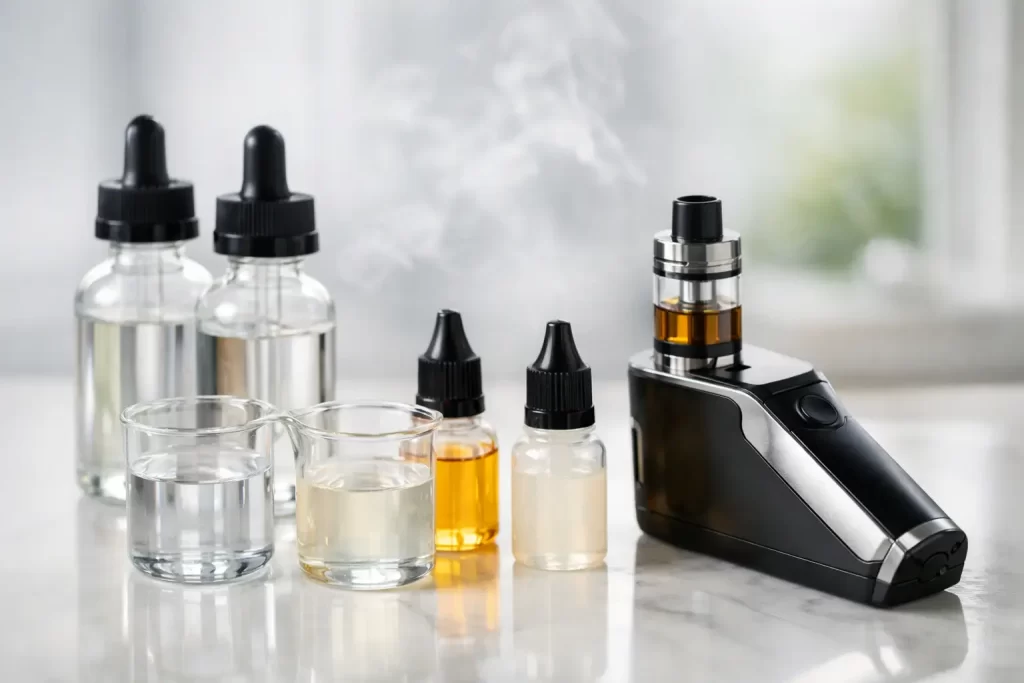
You notice it straight away when the ratio is wrong for your setup. The flavour feels muted, the throat hit is harsher than you wanted, or the pod starts struggling with a liquid that is simply too thick. That is exactly why a proper guide to e liquid PG VG ratios matters – getting this one detail right can make the difference between a smooth all-day vape and a bottle that never quite works.
For most adult vapers, PG and VG ratios are not about chasing technical jargon. They are about matching the liquid to the device you actually use. If you are on a simple pod kit, a high-VG shortfill built for sub-ohm tanks is likely to be a poor fit. If you are using a more powerful mod with low-resistance coils, a thin, high-PG blend may feel underwhelming and disappear too quickly. The right ratio keeps flavour, vapour, coil performance and satisfaction in balance.
A simple guide to e liquid PG VG ratios
PG stands for propylene glycol, and VG stands for vegetable glycerine. These are the two base liquids used in e-liquid, carrying the flavouring and, where included, the nicotine. Neither one is automatically better. They do different jobs, and the ratio tells you how much of each is in the bottle.
PG is thinner and tends to carry flavour more sharply. It also gives more throat hit, which many ex-smokers and MTL users prefer because it feels closer to a cigarette draw. VG is thicker and smoother, producing denser vapour and a softer inhale. If you like bigger clouds and a rounder vape, VG usually does more of the work.
That sounds simple enough, but the trade-off is where people get caught out. More PG often means clearer flavour and a crisper hit, but too much can feel a bit dry or harsh for some users. More VG usually means smoother vapour and larger clouds, but if your coil is small or your pod ports are tight, thicker liquid can struggle to wick properly.
What common PG VG ratios actually feel like
A 50/50 ratio is the most straightforward place to start. It is balanced, versatile and usually best suited to pod kits, starter devices and classic mouth-to-lung vaping. You get solid flavour, a noticeable throat hit and a liquid thin enough for smaller coils and lower power settings. For many adult vapers switching from smoking, this is the ratio that feels most familiar.
A 60/40 or 70/30 VG/PG ratio starts to lean more towards vapour production while still keeping flavour strong. These blends can work well in some newer pods and many mid-range devices, depending on the coil and wattage. They are often chosen by users who want a smoother vape than 50/50 but do not necessarily want to move into full sub-ohm cloud territory.
A max VG or 80/20 VG/PG liquid is thicker again. This is usually aimed at sub-ohm tanks, more powerful kits and direct-to-lung vaping. The vapour is fuller and softer, but the liquid needs the right hardware to keep up. Put an 80/20 blend into a basic pod not designed for it, and you may end up with dry hits, poor wicking or a burnt coil much sooner than expected.
Matching the ratio to your device
This is where the buying decision gets easier. Rather than asking which ratio is best overall, ask which ratio is best for your device and the way you vape.
If you use a pod kit or MTL device, 50/50 is usually the safest and most effective choice. These devices are built for thinner liquid, moderate vapour and efficient nicotine delivery. Nic salts are often blended at 50/50 for exactly this reason. The liquid feeds the coil properly, and you get a consistent inhale without flooding the pod or starving the coil.
If you use a sub-ohm tank, box mod or a more open DTL setup, higher VG is usually the better match. These coils have larger wick ports, run at higher wattage and are designed to handle thicker liquid. In return, you get warmer vapour, bigger clouds and a smoother inhale.
There are grey areas, of course. Some modern pod systems can handle 60/40 or even 70/30 blends well enough, especially with lower-resistance coils. But not every pod is the same. If you are unsure, it makes sense to check the coil range, the manufacturer guidance and how the liquid behaves after a few refills.
Flavour, throat hit and vapour – choosing what matters most
Every ratio changes the vape experience, and there is no single answer that suits everybody. Some customers care most about flavour intensity. Others want cloud production. Others simply want a smooth nicotine hit that keeps them off cigarettes.
If flavour definition is top priority, more PG often gives a cleaner, brighter result. Fruit and menthol profiles can feel sharper, and tobacco blends can come across with more edge. If you prefer a softer, denser vape, more VG can make dessert and creamy flavours feel fuller.
Throat hit is another big factor. Higher PG ratios generally feel stronger on the inhale. That is helpful for smokers moving across to vaping and for anyone who likes a firmer hit. Higher VG smooths things out. If your current liquid feels too punchy, dropping the PG level may improve the experience.
Then there is vapour production. This is where VG clearly leads. Thick, cloud-focused liquids are chosen for a reason. But bigger clouds are not always better if your device cannot wick the liquid properly or if you prefer a discreet vape on the go.
The most common mistake – using the wrong ratio for the coil
A lot of poor vape performance gets blamed on the device when the liquid is the real issue. If the e-liquid is too thick for the coil, it may not soak into the cotton quickly enough. That causes dry hits, burnt taste and shortened coil life. If the liquid is too thin for a powerful setup, it can oversaturate the coil, spit or leak more easily.
This is why ratio matters as much as flavour choice. You can buy a premium e-liquid in a flavour you would normally love, but if it is not right for your setup, you will never get the best from it. A good match protects coil life, improves consistency and saves money over time.
A practical guide to e liquid PG VG ratios for beginners
If you are new to vaping, keep it simple. Start with the type of device you have, not with what sounds most advanced.
For a basic pod or starter kit, go with 50/50. It is the most forgiving option and usually the best pairing for nicotine salts or standard freebase liquids at lower power. If you are using a sub-ohm kit with lower-resistance coils, choose a higher VG liquid, often 70/30 VG/PG.
If something feels off, pay attention to the signs. Harsh throat hit can mean the PG is higher than you prefer, or the nicotine strength is too much for your style of vaping. Weak vapour on a sub-ohm setup can mean the liquid is too thin. Dry hits on a pod can mean the liquid is too thick. These small clues tell you what to change next.
For regular vapers who like to switch between devices, it is worth keeping different ratios for different setups rather than trying to make one bottle do everything. That approach usually gives better results and fewer wasted coils.
How to choose in the shop without overthinking it
The best advice is practical advice. Tell the staff what device you use, what coil is inside it and whether you prefer stronger flavour, smoother vapour or a more cigarette-like throat hit. From there, it is much easier to narrow down the right bottle.
That is where a proper vape shop has real value. Instead of guessing online, you can match the liquid to the hardware, ask about flavour ranges and avoid buying a ratio that does not suit your kit. For customers in Larnaca and Oroklini, Vape Culture has built its reputation on exactly that kind of in-store guidance – helping beginners and experienced users find the right setup at the right price.
PG VG ratios are not complicated once you stop treating them like a technical test. Think of them as a fit issue. The right ratio should suit your device, your inhale style and the sort of vape you actually enjoy day to day. Get that right, and every bottle has a better chance of being one you finish rather than one you regret buying.