
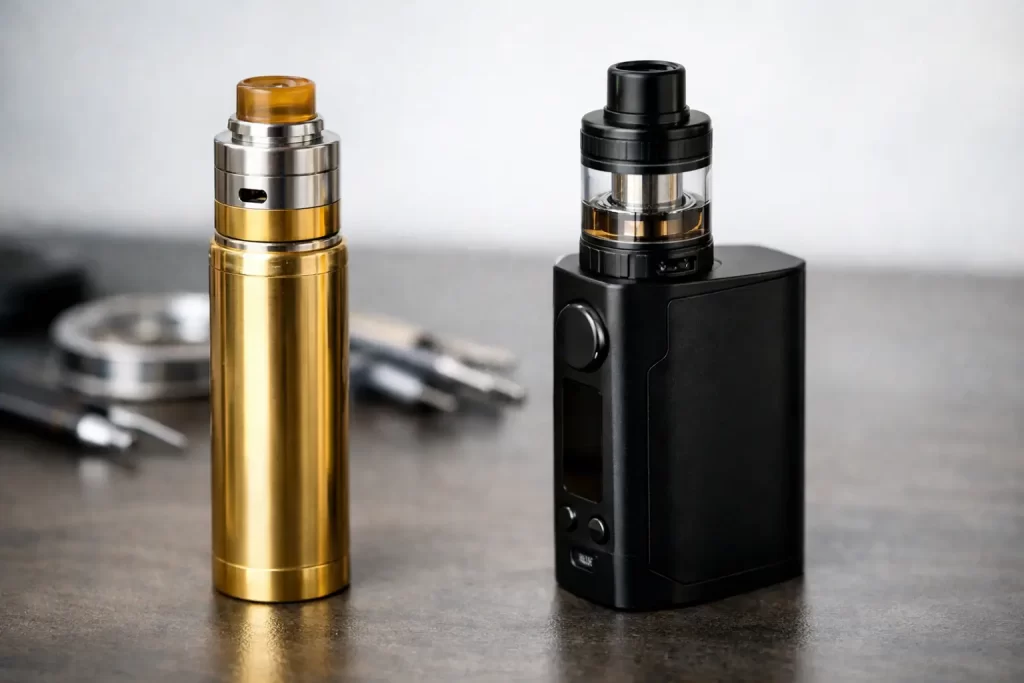
You can usually tell within two minutes whether someone asking about a mechanical mod vs regulated device wants a hobbyist setup or simply a vape that works every day without fuss. That distinction matters, because these two categories are not just different styles of kit. They demand a different level of knowledge, maintenance and responsibility.
For most adult vapers walking into a shop, a regulated mod is the better match. It offers consistency, built-in protections and a far easier learning curve. Mechanical mods still have a place, but they are specialist devices for experienced users who understand batteries, resistance and safe builds in detail.
Mechanical mod vs regulated: the real difference
A regulated mod uses a chipset to control power delivery. You set the wattage or temperature, and the device manages the output for you. It also includes safety features such as short-circuit protection, low-voltage cut-off, overheat protection and, on many models, battery monitoring on screen.
A mechanical mod is much simpler in construction and far less forgiving in use. There is no chip, no screen and no electronic safety net. Press the button and the battery sends power directly to the atomiser. What you get depends on battery charge, coil resistance, contact condition and the overall quality of the setup.
That simplicity is exactly why some advanced users like them. Fewer parts, a direct connection and a stripped-back feel appeal to hobbyists. But simple does not mean easier. In practice, a mechanical mod asks more from the person using it every single day.
Why regulated mods suit more vapers
If your priority is dependable performance, a regulated device wins comfortably. You get predictable output, which means your vape feels much the same from the first few puffs after charging to the point where the battery needs topping up. That consistency is one of the biggest reasons regulated mods remain the go-to option.
They are also far more flexible. A modern regulated device can work well for lower-wattage MTL vaping, restricted direct lung setups and higher-power sub-ohm tanks. Whether you prefer a compact device from Vaporesso or OXVA, or a more powerful mod from Geekvape, Voopoo or Lost Vape, regulated platforms give you room to adjust without rebuilding your whole setup.
For newer users, the safety side is the key point. If a coil is installed incorrectly or resistance drops too low, a regulated mod will usually warn you or refuse to fire. That does not remove all risk, because batteries still need to be treated properly, but it gives you a far safer margin for error.
There is a practical value angle too. When a device helps prevent obvious mistakes, it can save coils, batteries and frustration. For many customers, that is a better investment than chasing a more niche setup that demands constant attention.
Where mechanical mods still appeal
Mechanical mods appeal to experienced enthusiasts who enjoy the engineering side of vaping. They often like building coils, understanding voltage drop, choosing the right battery chemistry and keeping contacts clean for best performance. For this type of user, the attraction is control through knowledge rather than control through a menu system.
Some also prefer the form factor. A mech tube, for example, can feel elegant and direct in a way that some box mods do not. Others enjoy the connection to rebuildable vaping culture and the discipline that mechanical devices require.
But this is where honest advice matters. A mechanical mod is not an upgrade just because it looks more advanced or more serious. For many people, it is actually a step away from convenience. Performance changes as the battery drains, maintenance matters more, and mistakes have less protection between them and the user.
Safety is not a small detail
When comparing mechanical mod vs regulated devices, safety should be near the top of the decision, not tucked away at the end. Regulated mods are designed with protections specifically to reduce common user errors. That makes them a better fit for the majority of adult vapers, including many experienced ones who simply want reliable daily use.
With a mechanical mod, battery knowledge is essential. You need to understand continuous discharge ratings, amp limits, battery wraps, proper storage and charging habits. You also need a solid grasp of Ohm’s law. If that sounds like too much homework for a daily vape, that is a useful answer in itself.
The atomiser matters just as much. Mechanical mods are commonly paired with rebuildables, and poor builds can create serious risk. A regulated mod can often flag a problem before it becomes dangerous. A mechanical device cannot.
This is why good shop guidance matters. The right advice is not about pushing the most expensive hardware. It is about matching the device to the person using it and making sure they leave with something they can use safely and confidently.
Performance and vape experience
Some people assume a mechanical mod always hits harder. That is too simplistic. A fresh battery on a well-maintained mechanical setup can feel immediate and powerful, especially with the right build. But that performance falls away as battery voltage drops.
A regulated mod, by contrast, can maintain your chosen wattage far more consistently. If you like a 55W vape, the device works to keep it there. That steadiness is a big advantage for flavour consistency and everyday satisfaction. Many vapers trying the two side by side realise that what they really value is not the raw feel of direct battery output, but repeatable performance without guesswork.
There is also the question of tanks and atomisers. Most adult vapers today use sub-ohm tanks, pod mods or practical rebuildables on regulated devices because the experience is simpler to manage. You can pair a quality tank with a regulated mod and get excellent flavour, strong battery life and straightforward upkeep. For daily use, that combination is hard to beat.
Cost, upkeep and day-to-day reality
At first glance, a mechanical mod can seem like the simpler purchase. Fewer electronics, fewer menus, sometimes a very clean design. But ownership is not only about the device itself. It includes batteries, chargers, rebuildable knowledge, maintenance time and the cost of getting things wrong.
A regulated mod often represents better day-to-day value for the wider market. It is easier to set up, easier to troubleshoot and easier to recommend across different vaping styles. If a customer wants dependable use, simple adjustments and broad compatibility with current tanks and coils, regulated is usually the smarter spend.
Mechanical mods can still make sense for experienced hobbyists who know exactly why they want one. In that case, the value is in the specific experience, not convenience. The problem comes when someone buys one for image rather than suitability.
Who should choose which?
If you are relatively new to vaping, moving up from a pod kit, or simply want a device that performs well with less effort, choose regulated. That applies to a huge share of adult vapers, including many who have been vaping for years and have no interest in complicated setups.
If you already build confidently, understand battery limits thoroughly, maintain your equipment properly and genuinely want the direct, unregulated style of vape, a mechanical mod may suit you. Even then, it should be a deliberate choice, not an impulse buy.
For most customers, the best path is not asking which category sounds more advanced. It is asking which one fits how you actually vape. If you want reliability, adjustability and built-in reassurance, regulated mods remain the strongest all-round option.
At Vape Culture, that is exactly how we guide customers in store – by looking at experience level, preferred vape style, tank choice and budget before pointing anyone towards a device.
Mechanical mod vs regulated: the smarter question
The smartest question is not which one is better in general. It is better for whom. Regulated mods lead on safety, convenience, consistency and versatility. Mechanical mods appeal to a narrower, experienced crowd that values direct output and accepts the extra responsibility that comes with it.
If you are unsure, that usually points you towards regulated rather than mechanical. A good vape should fit your routine, not turn every battery change and coil choice into a technical exercise. Choose the device you will use confidently, maintain properly and enjoy every day.