
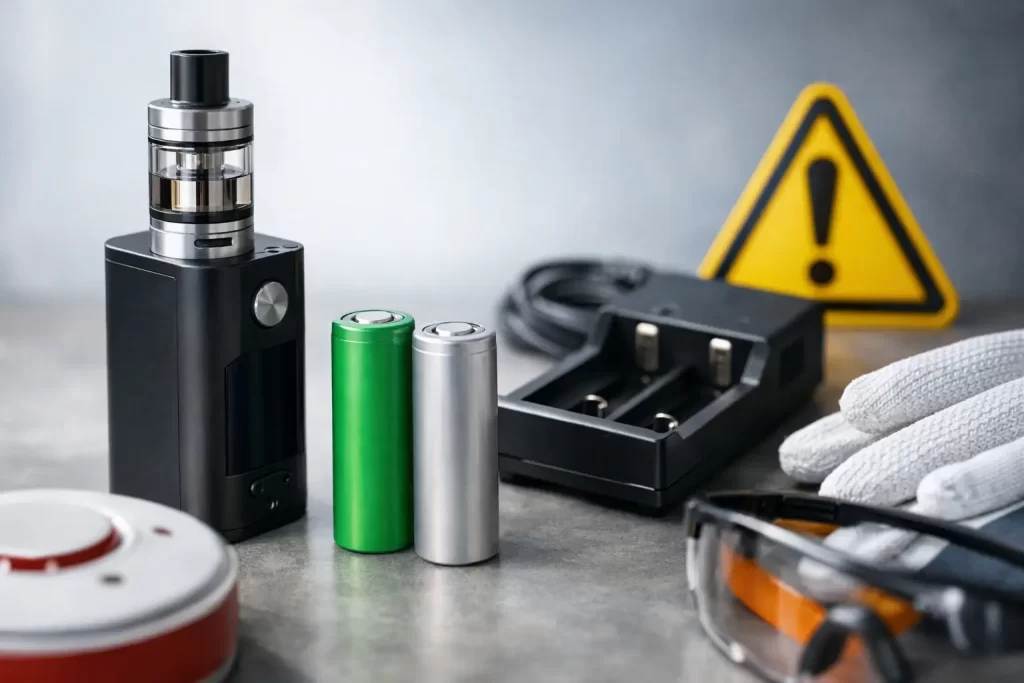
A vape that suddenly gets hot in your pocket is not a small issue – it is usually a warning sign that something has gone wrong with the battery, the charging setup, or the way the device is being carried. That is exactly why this guide to vape battery safety matters for every adult vaper, whether you use a simple pod kit or a more advanced dual-battery mod.
Battery safety is not about making vaping feel complicated. It is about avoiding the few mistakes that cause most battery problems in the first place. In the shop, we see the same patterns again and again: loose batteries carried with keys, damaged wraps ignored for too long, the wrong charger used because it was convenient, or a battery pushed beyond what the device actually needs. The good news is that most of this is easy to fix once you know what to look for.
Guide to vape battery safety – start with the right battery
Not every vape uses the same battery setup, and that matters. Many beginner pod systems have built-in batteries. They are generally straightforward because the battery stays inside the device and the risk of handling the cell directly is reduced. Even then, you still need to charge the device properly and stop using it if it becomes unusually hot, swollen, or unreliable.
Replaceable battery devices need more attention. Mods using 18650, 20700, or 21700 cells give you flexibility, stronger performance, and easy battery swaps, but they also put more responsibility in your hands. You need the correct battery type, from a reputable maker, with the right discharge rating for your device and your style of vaping.
This is where many people go wrong by shopping purely on the biggest mAh number they can find. Capacity is important if you want longer battery life, but it is not the only figure that matters. A battery with higher capacity may have a lower continuous discharge rating, and that can be the wrong choice for a more demanding setup. If you are unsure, ask before you buy. The right match is always better value than replacing overheated or stressed batteries later.
Why battery wraps and condition matter
A battery wrap is not cosmetic. It is part of the battery’s insulation. If the wrap is torn, nicked, or peeling near the top, the metal body of the cell may be exposed. That creates a much higher risk of a short circuit, especially when the battery is inserted into a mod or carried outside a case.
Give your batteries a quick visual check whenever you replace them or charge them. If the wrap is damaged, stop using that cell until it has been rewrapped properly. If the battery itself is dented, leaking, or gets hot for no clear reason, retire it. Trying to squeeze more life out of a suspect battery is never a smart saving.
There is also a difference between an old battery and an unsafe one. A battery that no longer lasts as long as it used to may simply be ageing. A battery that charges erratically, drains abnormally fast, or heats up under normal use is telling you something more serious.
Married batteries for dual-battery mods
If your device uses two batteries, use a matched pair and keep them together for that device only. This is often called marrying batteries. Buy them at the same time, use the same brand and model, and charge and rotate them together.
Mixing one older battery with one newer battery can lead to uneven strain. The same goes for mixing different brands or capacities. The device may still power on, but that does not mean the setup is ideal or safe.
Charging habits that make a real difference
Charging is where small habits matter most. The safest route for replaceable cells is usually a good-quality external charger. It gives better monitoring, more stable charging, and less wear on the mod’s USB port. That said, many regulated devices from major brands support onboard charging reliably when used correctly. It depends on the device, the cable, and the power source.
Use the cable and charging method recommended by the manufacturer where possible. Avoid cheap, unverified plugs and random cables from old gadgets. Fast charging sounds convenient, but not every vape device or cell benefits from it. In some cases, slower and steadier is simply the better option.
Charge on a flat, clear surface. Not on a bed, not under a pillow, and not on a sofa arm while you forget about it for three hours. Heat needs somewhere to go. Keep the area dry and away from direct sun.
You should also avoid charging batteries unattended overnight. Plenty of people do it, but that does not make it best practice. If a problem starts, you want to notice it early, not when you wake up.
Signs you should stop charging immediately
If a battery or device becomes excessively hot, smells unusual, makes odd noises, or shows swelling, disconnect it if it is safe to do so and stop using it. The same goes for a charger that behaves unpredictably or a charging port that feels loose or damaged. A charging issue is not something to monitor for weeks – it is something to act on straight away.
Carrying batteries safely when you are out
One of the most common battery mistakes has nothing to do with vaping itself. It happens in pockets, bags, and car consoles. Loose batteries should never be carried with coins, keys, or other metal objects. If the terminals come into contact with metal, the battery can short circuit very quickly.
Use a proper battery case every time. It is a cheap accessory and one of the easiest ways to avoid a serious problem. If you carry spare cells for work, travel, or a long day out in Larnaca or Oroklini, a case is essential, not optional.
Heat is another factor people underestimate. Do not leave batteries or devices in a hot car, especially in Cyprus. High temperatures can damage the battery, reduce performance, and increase safety risks. If your device has been sitting in strong heat, let it return to a normal temperature before using or charging it.
Using your device within sensible limits
Most regulated devices include built-in protections, and that helps. Protections against overcharging, short circuits, and low voltage are a major reason why established brands remain the better choice. Still, built-in safety features are not a licence to ignore common sense.
If you use a powerful sub-ohm setup, your batteries will work harder than they do in a modest MTL device. That does not mean high-power vaping is inherently unsafe, but it does mean battery choice becomes more critical. The more demanding the setup, the less room there is for poor-quality cells or guesswork.
Keep your battery contacts clean, your door or compartment secure, and your settings realistic for the coil and device. If something feels off – weak firing, unusual heat, random power drops – do not keep pushing through it. Check the batteries, the coil, and the device before carrying on.
Counterfeit batteries are a false economy
Cheap batteries from unknown sources can look like a bargain until they are not. Counterfeit or rewrapped cells often make claims they cannot safely deliver. That is one of the clearest examples of where chasing the lowest price stops being good value.
Trusted brands, proper specs, and knowledgeable advice matter here. If the battery branding looks odd, the ratings seem too good to be true, or the source is questionable, leave it alone.
A simple routine for safer vaping
The best guide to vape battery safety is not about memorising technical charts. It is about building a few reliable habits. Check wraps regularly. Charge with care. Carry spare batteries in cases. Replace tired or damaged cells promptly. Use the right batteries for the right device.
For newer vapers, built-in battery pod kits can be a sensible starting point because there is less to manage. For experienced users who prefer external battery mods, the flexibility is excellent, but only if the basics are respected. Neither option is automatically better for everyone. It depends on how you vape, how often you are out and about, and whether convenience or swap-and-go performance matters more to you.
At Vape Culture, this is exactly the sort of practical advice that helps customers buy with confidence and avoid expensive mistakes. The right battery setup should feel straightforward, dependable, and matched to your device – not like a gamble.
If you are ever unsure about a battery, charger, or device behaving differently than usual, treat that uncertainty as a reason to check, not a reason to carry on and hope for the best.